If you own an inflatable boat, kayak, tender or RIB, understanding the basics of boat inflation can make a huge difference to performance and safety on the water. Whether you are preparing a compact towable for a day at the beach or inflating a larger PVC RIB ready for launching from the stern of a yacht, choosing the right pump and valve setup matters.
Correct inflation improves handling, stability, fuel efficiency and comfort, while the wrong pressure can affect everything from the keel shape to how efficiently the boat tracks through the water.
Modern inflatable boats are designed to be durable, lightweight and practical, but manufacturers rely on users maintaining the correct PSI levels to get the best results. That is why understanding valves, pumps and pressure gauges is essential for anyone using an inflatable craft regularly.
Understanding Inflatable Boat Valves

One of the most important parts of any inflatable boat setup is the valve system. The valve controls how air enters and exits the chambers and ensures pressure is maintained once the boat is inflated. Different boats use different valve styles, and choosing a compatible pump attachment is really important.
The most common valve found on modern inflatable boats and paddle boards is the Halkey Roberts valve, often shortened to HR valve. These one-way valves are widely used by manufacturers because they are reliable, secure and easy to use once you understand the locking mechanism. An HR valve prevents air from escaping during inflation, helping users achieve the correct pressure more efficiently. They are commonly found on PVC tenders, inflatable kayaks, towable inflatables and RIB boats.
Another popular option is the Bravo valve system, frequently used on high-pressure inflatables and premium boats. Bravo pumps and valve fittings are well known for durability and accurate pressure control.
Before purchasing a new pump, it is always recommended to check the valve compatibility on your boat. Many modern electric pumps include a range of adapters designed to fit multiple valve styles, making them suitable for several inflatables, including kayaks, paddle boards and towables.
Understanding how your valve works also makes deflating much easier and ensures proper inflation. Most Halkey-Roberts and Bravo valves feature a push-and-turn pin system that allows air to escape quickly when packing the boat away. Efficient deflation functionality can significantly reduce storage time and make transporting larger inflatables far easier, and lead to less stress.
Why Correct PSI Matters

Maintaining the correct PSI is one of the most overlooked aspects of boat inflation. Under-inflated boats can feel sluggish and unstable, while over-inflation may damage seams, valves or air chambers, particularly during heat when expanding air increases internal pressure.
The correct PSI depends on the type of inflatable and the recommendations provided by the manufacturers. Smaller inflatable dinghies may require lower pressure, while high-performance, rigid inflatable boats, such as RIB boats with inflatable keels, often need significantly higher PSI levels to maintain rigidity and performance.
This is where a pressure gauge comes into play. A reliable pressure gauge allows users to monitor inflation accurately and avoid guessing. Many modern electric pumps now feature integrated digital pressure gauges with automatic shut-off functionality, which stops inflation once the target PSI is reached. This not only improves convenience but also helps protect the boat from accidental over-inflation.
Manual pumps can also come equipped with analogue pressure gauges, although they may be slightly less precise than digital versions. Regardless of pump type, regularly checking pressure before launching is recommended, especially after long storage periods or significant temperature changes.
Correct pressure affects how the inflatable keel performs in the water, how efficiently the boat planes, and how stable passengers feel onboard. Even rowing performance with oars improves when chambers are inflated to the correct PSI.
Manual Pumps vs Electric Pumps

When selecting a pump for boat inflation, most users choose between manual and electric models. Both options have advantages depending on how and where the inflatable boat will be used.
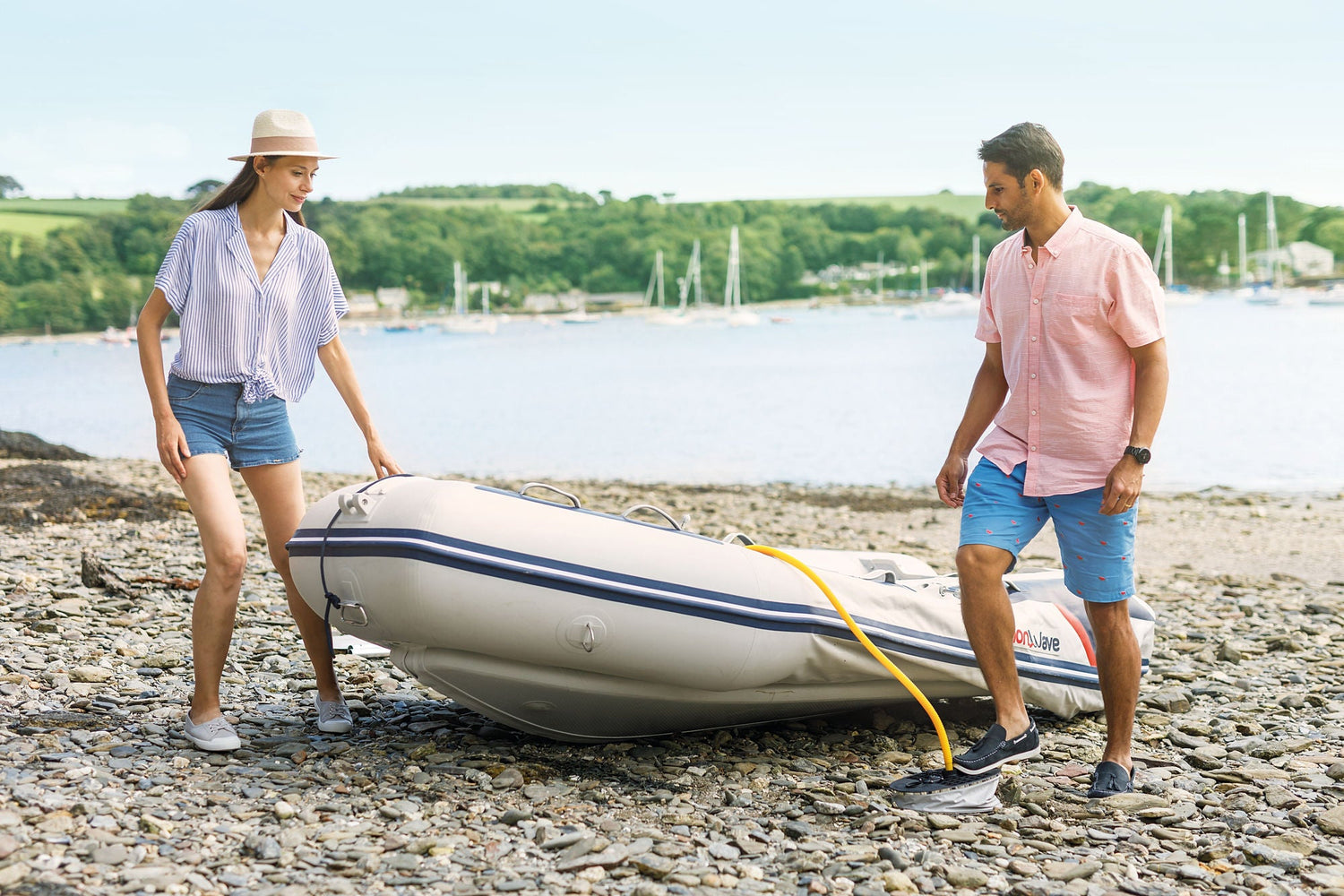
Manual pumps are popular because they are reliable, portable and do not require an external power source. A traditional foot pump is often included with smaller inflatables and is ideal for occasional use. Foot pumps are compact, easy to store and suitable for topping up pressure before launch. However, they can become tiring when inflating larger boats or high-pressure air floors.
Dual-action hand pumps are another common option. These pumps inflate during both the up and down strokes, helping users inflate boats more quickly and efficiently. They are particularly useful for paddle boards, inflatable kayaks and more compact tenders.
Electric pumps, however, have become increasingly popular for regular users and larger inflatables. A quality electric pump can dramatically reduce setup time while ensuring more accurate PSI levels. Most electric pumps connect to a 12V compressed air source such as a car battery or power outlet, although rechargeable battery-powered models are also becoming more common.

Two-stage electric pumps are especially recommended for larger RIB boats because they combine rapid low-pressure inflation with slower high-pressure topping up. This delivers quicker inflation without effecting accuracy. Many premium pumps also feature automatic shut-off systems and digital displays.
One major advantage of electric pumps is convenience. Instead of spending 10 to 15 minutes manually inflating chambers, users can prepare the boat while the pump handles the work. For families, anglers or anyone launching regularly from slipways or marinas, this can significantly improve the overall boating experience.
Manual pumps still serve an important backup role onboard. Carrying a compact foot pump or hand pump as part of an emergency kit is recommended in case pressure adjustments are needed while away from shore.
Choosing the Right Pump for Your Boat
Selecting the best pump depends on several factors, including boat size, valve compatibility, storage space and intended use. A small towable or compact inflatable tender may only need a basic foot pump, while a large PVC RIB with an inflatable keel will benefit greatly from a high-capacity electric pump.
Boat owners should also consider how often they inflate and deflate their craft. Occasional users may prioritise portability, while regular users often appreciate the speed and convenience of electric systems.
Valve compatibility is another key consideration. Pumps with universal fittings or interchangeable adapters are generally the most versatile option, especially if you own multiple inflatables.
Noise level can also matter in certain environments. The motors on electric pumps are efficient but can be relatively noisy, especially early in the morning at busy launch sites or campsites. Manual pumps are a much quieter alternative.
Durability is also really important. Marine environments can be harsh on equipment, so investing in reliable pumps and accessories from trusted manufacturers is highly recommended. Brands such as Bravo have built strong reputations for dependable inflation products that perform consistently.
Practical Tips for Easier Inflation
Before starting the boat inflation process, it is important to prepare a safe and suitable area for setup. Always inflate your inflatable boat on a flat surface to help ensure even air distribution and accurate pressure levels across all chambers and the keel.
Uneven ground can place unnecessary strain on seams and valves, particularly on larger PVC inflatables and RIB boats. It is also essential to check the surrounding area for sharp objects such as stones, shells, hooks or debris that could puncture or damage the boat during inflation. Taking a few moments to clear the surface before using a foot pump or electric pump can help prevent costly repairs and extend the life of your inflatable boat.
To properly inflate your boat, you also want to start by inflating each chamber gradually rather than fully inflating one side first. This helps the boat maintain an even shape and reduces strain on seams. You can then focus on any seats if present.
Always check the recommended PSI for your specific boat model before inflating. You should be able to find it within the instructions or online. Over-inflation is particularly risky during hot weather because expanding air can increase chamber pressure significantly once the boat is in direct sunlight. It is estimated that there is a difference of about 3 millibars per degree. For this same reason, you should not leave your boat to stand in direct sunlight when out of the water, as this may cause expansion to the point of damage or bursting. Where possible, leaving the boat in the shade is recommended.
If your inflatable includes an air floor or inflatable keel, these sections often require higher pressure than the outer tubes. A quality pressure gauge helps ensure each chamber reaches the correct level.
When packing away the boat, use the deflate setting on electric pumps where available. This removes trapped air far more effectively and makes folding and storage easier, especially with larger PVC inflatables. A durable carry or pull bag makes transporting and storing your inflatable boat, pump and accessories much easier, while also helping protect the material and valves from damage between uses.
Finally, inspect valves regularly for dirt, sand or wear. Even high-quality HR valves can develop leaks if debris prevents a proper seal. Carrying a valve spanner and spare seals onboard is always recommended.
Find the Right Inflatable Boat Equipment at Seamark Nunn
Whether you are upgrading your current setup or buying equipment for a brand new inflatable, choosing the right pump and valve accessories can make boat inflation faster, safer and far more convenient. From compact foot pumps and pressure gauges to advanced electric inflation systems, having the correct equipment helps you spend less time setting up and more time enjoying the water.
At Seamark Nunn, you will find a wide range of recommended inflatable boat pumps, valve fittings, pressure gauges and marine accessories from trusted manufacturers.
Whether you own a small tender, a towable inflatable or a high-performance RIB, their expert range makes it easy to find reliable equipment suited to your boating needs.